Current Project: 2024 - 2027
RLA 7/028 – Strengthening Regional Capabilities on the Application of Nuclear and Isotopic Techniques to Increase Knowledge about Stressors that Affect Marine and Coastal Sustainable Management (ARCAL CLXXXIX)
Previous Projects:
RLA 7/025 – Strengthening Capacities in Marine and Coastal Environments Using Nuclear and Isotopic Techniques (2020-2023).
RLA 7/022 – Strengthening Regional Monitoring and Response for Sustainable Marine and Coastal Environments (ARCAL CXLV) (2018-2019).
RLA 7/020 - Establishing the Caribbean Observing Network for Ocean Acidification and its Impact on Harmful Algal Blooms, using Nuclear and Isotopic Techniques. (2014-2017)
RLA 7/014 – Designing and Implementing Systems for Early Warning and Evaluation of the Toxicity of Harmful Algal Blooms in the Caribbean Region, Applying Advanced Nuclear Techniques, Radioecotoxicological Evaluations and Bioassays (2009-2012).
Participating Institutions:
Universidad de El Salvador
Research Areas:
- Ocean Acidification.
- Harmful Algal Blooms (HABs) and Marine Biotoxins.
- Microplastic contamination.
- Eutrophication.
- Blue Carbon.
THE PROBLEM
El Salvador has a 321 kilometre coastline affected by environmental problems that include contamination from agrochemicals and domestic and industrial discharges, solid waste, mainly plastic, "red tides" that cause accumulation of toxins in molluscs representing a high health risk, coastal erosion, sedimentation of estuaries and bays, indiscriminate felling and conversion of mangroves to agricultural land, and expansion of human settlements due to tourism projects.
The coastal area of El Salvador has low coverage of sanitary sewage and no wastewater treatment, which leads to high levels of pollution of various kinds. For example, heavy metals have been detected in fish at concentrations that exceed 12 times the regulatory level for human consumption, high levels of ammonia in water, and very high health risk due to contamination of solid waste and organic matter in some coastal areas of the country. As for solid waste, the latest data collected indicates that more than 106,000 tons of plastic are discarded each year in the country.
Since 2001, there have been at least 15 “red tide” events, or harmful algal blooms, on the Salvadoran coast. These events have caused the death of one person and intoxicated seven. Red tides have also generated impacts on fishing activities due to the imposition of bans on the extraction, commercialization and consumption of shellfish, generating social unrest in coastal communities that are dedicated to this area. The impacts on coastal ecosystems have also been notable, it is estimated that around a thousand sea turtles died from toxins associated with microalgae in 2013 and 2017. In addition, red tides have caused massive fish deaths in 2012, 2014 and 2017.
INFORMATION FOR ACTION
The Laboratorio de Toxinas Marinas of the Universidad de El Salvador (LABTOX-UES) maintains a Permanent Program for Monitoring Harmful Algal Blooms (HABs) in the coastal zone since 2007, providing quality information for decision-making government institutions. Thanks to permanent monitoring, since this laboratory has been operating, El Salvador has not reported deaths from red tide.
On the other hand, LABTOX-UES has begun the study of microplastics on five beaches in El Salvador, detecting the presence of these contaminants in abundances that exceed 20 particles per kilogram of sand. It is necessary to continue with these efforts and extend the studies of microplastics in water and marine organisms.
Estos esfuerzos de investigación se realizan en conjunto con la Red de Investigación de Estresores Marino Costeros en Latinoamérica y el Caribe (REMARCO), y 18 países de la región que conforman la Red, respaldados por el Organismo Internacional de Energía Atómica (OIEA). El monitoreo permanente, recurso humano capacitado, difusión de resultados y el apoyo de la cooperación nacional e internacional, son acciones que contribuyen a salvaguardar la vida de las personas y conservación de la zona costera.
However, human and financial resources are required for operating costs, as well as the support of inter-institutional cooperation to maintain the Program and expand its coverage to the eastern coasts of the country.
Country Members:
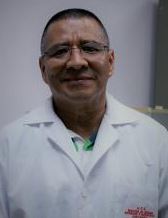
Oscar Armando Amaya Monterrosa. Physicist - Master’s Degree

Faculty of Natural Sciences and Mathematics, University of El Salvador.
Component: Marine Toxins and Blue Carbon
Role in the Project: National Counterpart and Research Technician
Contact info: oscar.amaya@ues.edu.sv / +503 79891987 +503 70710663
Bachelor in Physics, Specialist in Radiochemistry, and Master of Science. Professor of Nuclear Physics at the School of Physics, Faculty of Natural Sciences and Mathematics, University of El Salvador. Director and founder of the Marine Toxins Laboratory (LABTOX-UES) since 2007 to the present. Liaison officer for the International Nuclear Information System (INIS) of the International Atomic Energy Agency (IAEA). He has supervised over 15 undergraduate and graduate theses in the sciences. Author of three books and more than 30 scientific articles published in national and international indexed journals. Over the past 15 years, he has focused on studying environmental stressors using nuclear and isotopic methods, formulating and implementing more than 14 projects funded by the IAEA.
Josué Armando Hernández Fuentes. Physicist - Bachelor's graduate in Physics

Faculty of Natural Sciences and Mathematics, University of El Salvador.
Component: Blue Carbon
Role in the Project: Researcher in sediment radiogeochronology using Lead-210
Contact info: josuejh2204@gmail.com / +503 7933-6943
Physics graduate with experience in sediment geochronology. He completed his social service at the Marine Toxins Laboratory (LABTOX-UES), where he participated in sediment dating activities using radionuclides. He was part of the high-achieving students program, contributing to the dating of sediment cores under the regional project RLA7025, promoted by the International Atomic Energy Agency (IAEA). He received specialized training in the Lead-210 technique during a stay at the IAEA Marine Laboratory in Monaco, strengthening his skills in alpha spectrometry and sedimentation rate analysis. He is currently a researcher at LABTOX-UES, collaborating in the area of sediment radiogeochronology within the national project ELS7011. His work focuses on the application of nuclear methods for the historical reconstruction of aquatic ecosystems, with emphasis on the study of blue carbon accumulation rates and the assessment of environmental impacts in coastal areas.
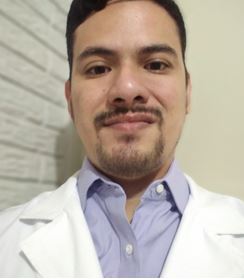
Darwin Josué López Alvarenga. Physicist - Bachelor's graduate in Physics

Faculty of Natural Sciences and Mathematics, University of El Salvador.
Component: Blue Carbon
Role in the Project: Researcher focused on Blue Carbon quantification
Contact info: la17024@ues.edu.sv / +503 70656402
Researcher focused on blue carbon quantification, with experience in determining organic carbon in sediments through elemental analysis. He has received technical training at the Marine Environment Laboratory in Monaco and has participated in virtual trainings offered by the International Atomic Energy Agency (IAEA), including the Virtual Regional Training Course on the Interpretation of NO₃ Isotope Data and Mapping of Pollution Sources. He is currently conducting applied research on the dynamics of blue carbon in mangrove sediments in Bahía de Jiquilisco, El Salvador, using standardized methodologies. Additionally, he performs chlorophyll-a studies in marine and freshwater bodies using the Lorenzen method. These activities are carried out at the Marine Toxins Laboratory of the University of El Salvador, within national and international projects aimed at the conservation of aquatic ecosystems and the monitoring of environmental quality.
Geophysicist - High School Graduate and Undergraduate Student in Geophysics. Geofísica – Bachiller y estudiante de la Licenciatura en Geofísica.

Faculty of Natural Sciences and Mathematics, University of El Salvador.
Component: Eutrofización
Role in the Project: Eutrophication Participant
Contact info: pg19001@ues.edu.sv / +503 7522 0154
Specialist in water resources, Geographic Information Systems (GIS), and remote sensing, with extensive experience in digital cartography for spatial analysis and environmental monitoring. She is currently a researcher at LABTOX-UES, participating in projects related to remote sensing and water body analysis. She has worked on thematic cartography for lakes, mangroves, and coastal areas, as well as environmental impact studies and soil characterization. Her experience also includes lithological analysis and field data collection. Additionally, she has served as an assistant in geology, hydrogeology, and geomorphology courses, integrating academic research with fieldwork. She is proficient in tools such as QGIS, ArcGIS, SNAP, and SINAPP, and has skills in data analysis, technical writing, and visual communication. She maintains ongoing training in GIS, remote sensing, and leadership.
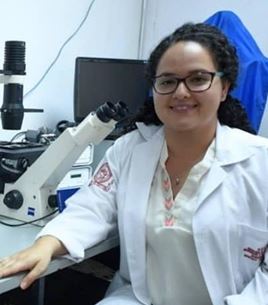
Alma Lizeth Aguilar Santos. Chemist - Master of Science

Faculty of Natural Sciences and Mathematics, University of El Salvador.
Component: Ocean Acidification and Eutrophication
Role in the Project: Component Lead (both cases)
Contact info: alma.aguilar@ues.edu.sv / +503 68334915
Chemistry professor and researcher at LABTOX in the Faculty of Natural Sciences and Mathematics at the University of El Salvador. She holds a Master’s degree in Marine Sciences and Limnology from UNAM, and a Bachelor’s degree in Chemical Sciences from UES. She is responsible for the chemical analyses carried out at LABTOX-UES related to ocean acidification (pH and alkalinity) and eutrophication (nutrients like nitrogen and phosphorus). Additionally, she conducts microcystin analysis and supports saxitoxin testing. She led the reporting of SDG Indicator 14.3.1, which was submitted for the first time in El Salvador’s history in February 2025, placing the country among the first in Central America to officially contribute to Sustainable Development Goal 14: Life Below Water.
Ingrid Carolina Argueta Argueta. Biologist - Biology Student

Faculty of Natural Sciences and Mathematics, University of El Salvador.
Component: Microplastic
Role in the Project: Microplastics Representative
Contact info: aa14021@ues.edu.sv / +503 7630 1674
Biologist graduated with a Bachelor’s degree in Biology, with training and experience in environmental research focused on microplastic pollution. She has participated in monitoring campaigns to determine microplastic abundance in beach sand and surface waters, including a pioneering study in El Salvador that used optical microscopy to analyze this emerging issue.
She received specialized training in monitoring microplastics in marine ecosystems using nuclear analytical techniques, as well as education in Microplastic Radioecology. Her skills have been strengthened through courses on spectroscopic analysis with Open Specy and the use of R programming language for environmental data management, visualization, and analysis. She worked as a research assistant at the Marine Toxins Laboratory (LABTOX-UES), an experience that enriched her perspective on emerging contaminants and their impact on environmental health. Currently, she is about to begin her research internship to complete her degree, focused on quantifying microplastics on beaches and coastal waters of El Salvador. Her work aims to generate knowledge that contributes to the proper management of this form of pollution in the country.
Krissia Sarai Portillo Prieto. Biologist - Undergraduate Student

Faculty of Natural Sciences and Mathematics, University of El Salvador.
Component: HABs Representative
Role in the Project: HABs Representative
Contact info: pp16012@ues.edu.sv / +503 6018-0890
Biologist with a Bachelor’s degree in Biology and experience in environmental monitoring. As a research assistant, she has participated in monitoring campaigns and is part of El Salvador’s Permanent Red Tide Monitoring Program, contributing to the collection of phytoplankton samples and data analysis on harmful algal blooms. She also participates in the HAEDAT course for managing databases on Harmful Algal Bloom (HAB) events, strengthening her skills in the systematic recording of these phenomena.
She holds a certification accredited by IOC/UNESCO for identifying harmful marine microalgae species and a diploma from the freshwater phytoplankton identification course, which has enhanced her taxonomic training. Additionally, she has a diploma in statistical analysis using R for phytoplankton studies and experience quantifying biovolume with this software.
She is currently developing her thesis focused on quantifying and identifying morpho-functional groups of phytoplankton in relation to the salinity gradient in an estuary, integrating knowledge of ecology, oceanography, and laboratory techniques.
Ana María Salinas Guzmán. Biologist - Bachelor's Degree

Faculty of Natural Sciences and Mathematics, University of El Salvador.
Component: Harmful Algal Blooms (HABs)
Role in the Project: HABs Representative
Contact info: ana.salinas@ues.edu.sv / +503 76171768
Biologist with a degree in Biology from the University of El Salvador, with experience in university teaching, marine research, and fisheries monitoring. She has served as a lecturer at the School of Biology, teaching courses such as Aquaculture and Seminar on Environmental Education and Climate Change, among others.
She worked as a phytoplankton analyst at the Marine Toxins Laboratory (LABTOX-UES), contributing to the monitoring of harmful microalgae in marine and freshwater ecosystems.
Her professional experience includes working as a field fisheries technician for the Inter-American Tropical Tuna Commission (IATTC), conducting inspections of large pelagic species—especially sharks—aboard artisanal fishing vessels along the Salvadoran coast. She also collaborated with CENDEPESCA in the supervision of Turtle Excluder Devices (TEDs) and fisheries inspections in the Jaltepeque Estuary area.
Jeniffer Marisol Guerra Alvarenga. Biologist - Bachelor's Degree
Faculty of Natural Sciences and Mathematics, University of El Salvador.
Component: Researcher for the Phytoplankton Component
Role in the Project: Researcher.
Contact info: jennifer.guerra@ues.edu.sv / +503 70293460
Researcher with experience in the analysis of marine and freshwater phytoplankton, with over 10 years of experience in the field. She is currently part of the team at the Marine Toxins Laboratory (LABTOX-UES), where she participates in monitoring activities both in the coastal zone and in the main water bodies of the country.
José Humberto García Barahona. Journalist - Bachelor’s Degree

Faculty of Natural Sciences and Mathematics, University of El Salvador.
Component: Communication
Role in the Project: Communication Focal Point
Contact info: humberto.barahona@ues.edu.sv / +503 76493164
Graduate in Journalism with five years of experience in institutional communication. He currently serves as Coordinator of the Communications Unit at the Faculty of Natural Sciences and Mathematics and is the communication focal point for El Salvador in projects RLA7028 and RLA7026, the latter with El Salvador as the host country. He has extensive experience in multimedia production, photography, voice-over, and audiovisual editing, specializing in live broadcasts. Additionally, he has actively participated in the research components of both projects by accompanying field trips, which has allowed him to gain direct experience in applied research.
Progress and Challenges
LABTOX-UES responds to red tide phenomena on the Salvadoran coast, using nuclear and conventional techniques such as microscopy.
El Salvador has positioned itself as the first country in the region to implement the Receptor Binding Assay (RBA) to determine the amount of toxin or poison associated with red tides present in samples of oysters, shells, snails, crabs, fish and sea turtles.
Over time, LABTOX-UES has increased its work areas in response to environmental problems of national interest and currently conducts research on contamination by heavy metals and microplastics, in addition to alpha and gamma spectrometry used to determine the age of different geological processes that are recorded in marine sediments.